
Warren County Report Trail
Warren County posts no multi-day booking log online. The county site names the sheriff and gives detention contacts. A searchable blotter is absent. For a running account of arrests, The Warren Record fills that gap. The paper runs periodic "From the Warren County Sheriff's Office" items. One such article listed names, ages, arrest dates, charges, bonds, custody notes, and court dates. Treat that coverage as a trail of leads. A newspaper story is not a jail roster. Publication can lag behind the events described. Several days of arrests may be folded into a single item. Current custody is never guaranteed by a news summary. Confirm any booking with detention, then check the case through North Carolina courts.
Read Warren Arrest Reports
- Open The Warren Record news index and find the article date.
- Identify the stated reporting period and source agency.
- Record the arrest date separately from publication date.
- Confirm current custody with Warren County Detention at 252-257-3314.
- Check the eCourts Portal or Warren Clerk at 252-257-6300 for the later case.
- For the immediate window, use Arrested Today.
Norlina and Warrenton each have their own town police. Macon relies on sheriff coverage. So the sheriff's report will not capture every town incident. Ask which agency wrote the report before filing a request.
Warren Report Fields Explained
| Field | Meaning and limit |
|---|---|
| Name and age | Source identifiers; verify identity and do not infer a full birth date. |
| Arrest date | Date reported for the arrest, not the article or booking-post time. |
| Agency | The office supplying or creating the report. |
| Charge | An charge recorded at that stage, not a disposition. |
| Bond | A reported amount that may later change. |
| Custody shorthand | A status at the source date, not proof of custody today. |
| Court date | A scheduled event that should be verified with the clerk. |
| Photo | No official Warren public-gallery policy was found. |
Warren Arrest News Capture
This captured Warren Record sheriff activity article illustrates the county’s periodic narrative format.
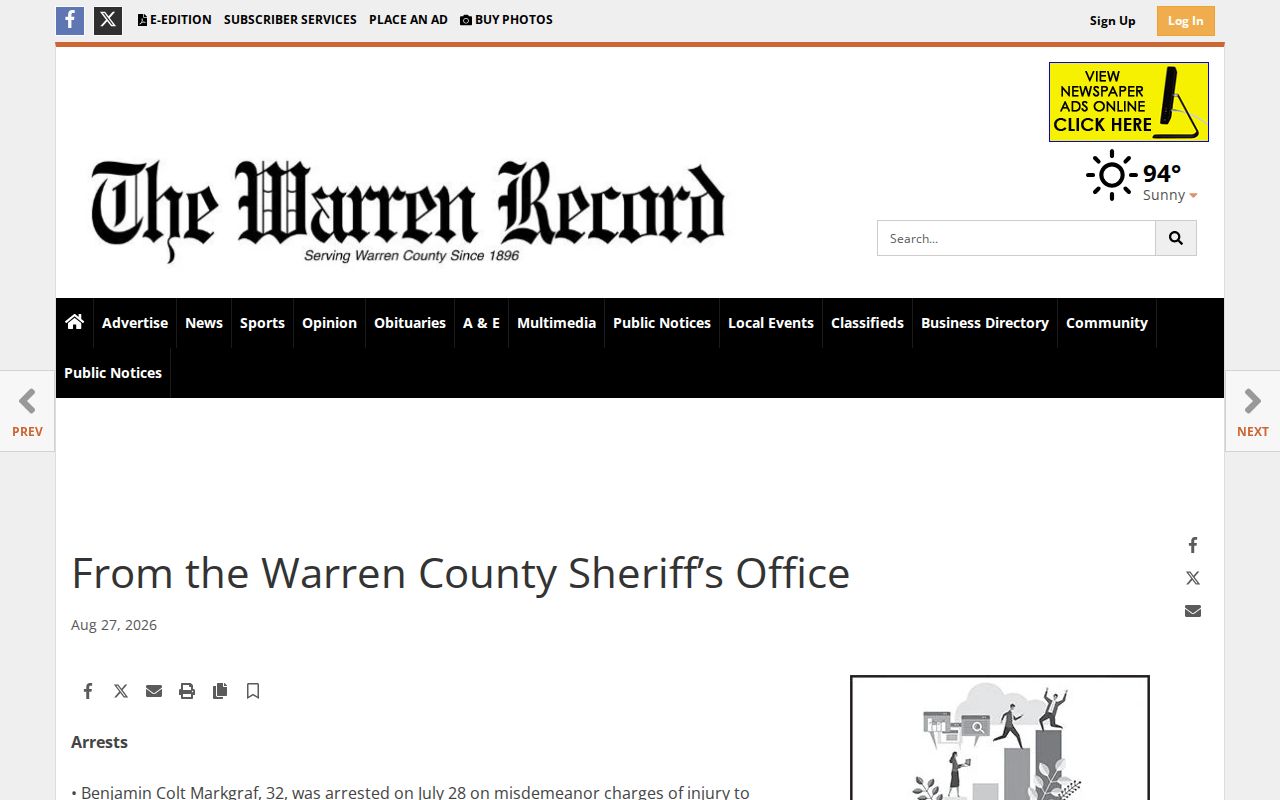
Read the article's date next to the event dates, since the page is not a live custody screen. The broader Warren Record news page offers another dated route into local reporting.
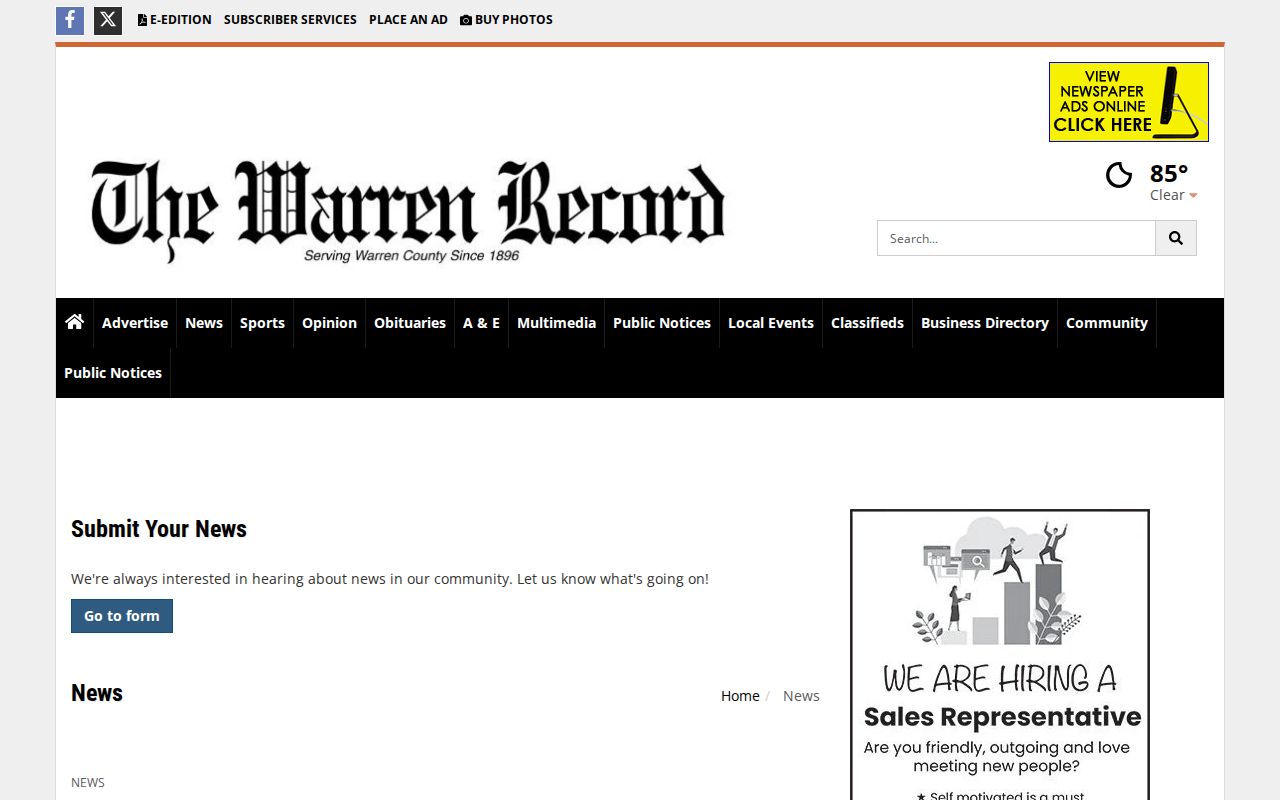
That index mixes arrest coverage with unrelated news. Check each item's source and scope.
Weekend Arrest Report Gaps
Weekends and holidays stretch the gap. The lag covers the arrest, jail entry, news summary, and court posting. Warren County announces no weekend upload rule. Avoid calling a later article a "72-hour log" unless it defines that span. Search by date and agency, then widen the range by several days.
When someone's custody or release matters right now, detention and VINE answer faster than a newspaper. A court docket shows case activity, not live jail custody.
Warren Arrest Report Archives
Retention rules set another limit. Weekly inmate lists furnished to the clerk can be destroyed once superseded or obsolete. Inmate-incarceration records are generally kept three years after release or transfer. Classification records follow the same three-year span. A retention period only says how long an office keeps a record. It does not promise the record stays online that long. Give the sheriff or records custodian a name. Add an approximate arrest date, the agency, and the record type you want. Ask whether the record still sits with that office. It may have been destroyed under an approved schedule or moved elsewhere. County-hosted Warren Record archives cover selected historic years. Those collections are no modern arrest database.
Municipal Reports Are Different
Warrenton board packets sometimes carry monthly police summaries. One November 2024 packet held an October summary with event categories and an arrest count. That is helpful for a month-long view of municipal activity. It is not a booking blotter, though. No searchable names, no photos, no current inmates, and no rolling multi-day window appear there. Norlina publishes no online town arrest log. Town incident data may require a direct police request. Macon has no separate municipal log or police department source, so a Macon-area inquiry should start with the sheriff while the responding agency is confirmed. These gaps mean one county news article can never stand in for full city coverage. A Warren Record sheriff item may name Norlina, Warrenton, Macon, or an unincorporated area when the report identifies the place. A county label alone proves nothing about city jurisdiction. Record the named agency and location exactly as reported. A residence, an arrest location, and an arresting agency are three distinct facts.
Request Older Warren Records
Start any Warren County records request with the specific item in hand. Give the full name used at the arrest, the approximate date, and the arresting agency if known. Say exactly what you want: an incident report, an arrest record, a booking sheet, an inmate record, or a photograph. Those are separate records. A custodian cannot swap one for another. Ask about the delivery method, copying cost, and expected response before you drive anywhere. The sheriff's page posts no booking-photo fee and promises no turnaround time.
North Carolina law draws a line between public arrest facts and confidential criminal-investigation material. The public side covers the time, date, location, and circumstances of an arrest. The rest of the investigative file stays closed. A custodian may redact protected portions. When part of a record is withheld, ask which record or portion is affected and which rule the office applied.
Warrenton Police keeps the clearest town process. Most reports are public subject to redaction. You can request an incident or arrest report in person, the copy costs $5, and the minimum wait is four business days. That policy covers Warrenton police reports only. County jail records follow their own rules. Once a case is underway, eCourts or the clerk holds the disposition, meaning how the matter was resolved.
Newspapers can outlive the agency record itself. Retention periods end. Warren County hosts selected Warren Record archives from 1929 through 1938 and 1959 through 1970, and DigitalNC carries a broader newspaper run. State Archives guidance points researchers to microfilm for even older issues. Treat these as historical tools. They will not tell you who is in custody today.
Handle archive material with care. Preserve the original date and language, then check current court sources for the outcome. Search snippets can outlive their source pages. A dead link may mean a moved page, an incomplete archive, or lawful disposal of the record. It proves nothing about the reported event.
Retention schedules matter here too. A weekly inmate-list report may be destroyed once a newer list supersedes it. Many inmate incarceration records are kept three years after release or transfer, and classification records follow the same period. Those numbers do not promise online access. They simply help you ask the right question: whether an older item still exists, moved to another custodian, or was destroyed under an approved schedule.
Keep a newspaper search just as tight. Pick a date range and an agency name, then read the full article rather than the headline. Watch for the abbreviation WCDC. Local reporting has used it for the county detention context, but it is newspaper shorthand, not a guaranteed field in every official jail record.
Official Sources Before Aggregators
Go to the source first. For Warren County, that means the detention center and the arresting agency. Add eCourts and dated local reporting. Third-party booking sites can serve as historical leads. Yet some tested Warren pages were missing, stale, generic, or simply unavailable. They may copy a booking photo without showing a later release or dismissal. A records search has no use for a paid removal link.
Search Public Records
Sponsored Results